Meshed reference planes are widely used to optimize differential insertion loss in high-speed PCB and FPC designs. However, mesh copper misalignment introduced during PCB exposure and lamination cause...
Both ENIG (Electroless Nickel Immersion Gold) and OSP are high-flatness surface finishes, outperforming HASL (Hot Air Solder Leveling) significantly. Thanks to its ultra-thin organic coating, OSP deli...
For high-speed PCBs, larger vias are not always better, and using a uniform via size across the board is not recommended. Juehui Weiye Circuit explains the selection logic for signal vias, power vias,...
Rigid-flex PCBs with outer-layer FPC are prone to warpage due to asymmetric stack-up, which triggers SMT misalignment and BGA cold solder joints. This paper analyzes the root causes of rigid-flex PCB ...
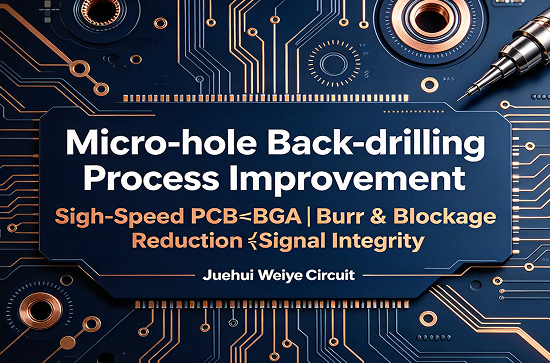
Juehui Weiye Circuit optimizes micro-hole back-drilling process for high-speed PCB BGA design. Eliminate inner burrs and hole blockage, control stub length for stable 112G / 224G PAM4 signal integrity...
Juehui Weiye Circuit specializes in the manufacturing of automotive HDI PCBs. Focused on mass-production pain points for high-level ADAS domain controller PCBs, we have developed mature mass-productio...
Victory Giant Circuit analyzes the root cause of non-plated through hole (NPTH) residual copper on high-aspect-ratio AI server PCBs with resin plugging. By adopting low-temperature curing resin ink pl...
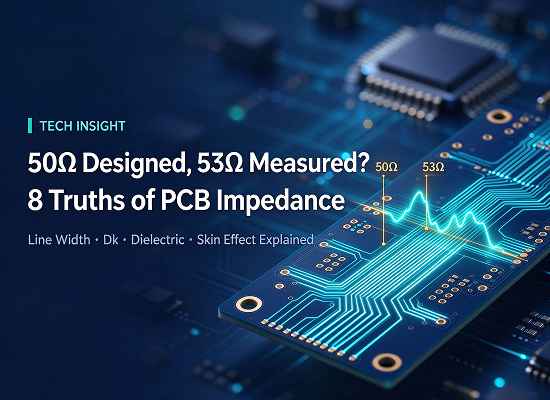
Your drawing specifies 50Ω but TDR reports 53Ω — a familiar "electrical dispute" in high-speed PCB prototyping. It is rarely a single mistake: etch undercut, PP lamination squeeze-out, fiberglass weav...
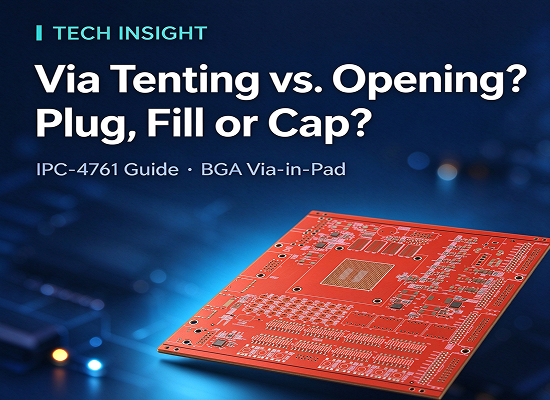
PCB via surface finishing comes in three processes — tenting, plugging, and fill-and-cap — corresponding to IPC-4761 Type I, Type III/IV and Type VII. Learn when to open vias for probing, current carr...
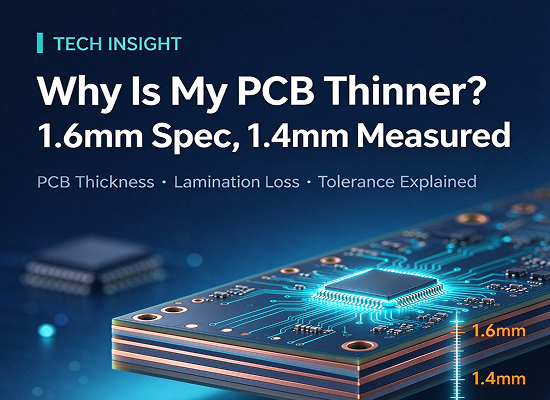
Is your finished PCB thinner than the "target thickness" on your drawing a sign of cost-cutting, or normal behavior? This article explains copper flow, prepreg squeeze-out, copper retention and IPC-60...
 189-2464-6170
 szjhpcb@VIP.126.com