189-2464-6170
 szjhpcb@VIP.126.com



Current Status and Development of Specialized PCB Material Enterprises in China
Research on Drill Entry Sheets & Backup Sheets for Drilling Processes
I. PCB Mechanical Drilling: A Critical Process for the AI & High-Performance Computing Era
End devices including AI servers, 800G switches and autonomous driving domain controllers impose three stringent requirements on printed circuit boards (PCBs): multi-layer construction, high aspect ratios and microvia architectures. This evolution has elevated drilling from a basic through-hole fabrication step to a core bottleneck governing production yield and long-term reliability. Industry statistics indicate that over 60% of field failures in electronic products are directly linked to PCB hole quality. Against this backdrop, entry and backup sheets used in drilling have evolved beyond simple auxiliary protective materials to become a decisive factor influencing hole position accuracy, hole wall integrity and drill bit service life.
Vias perform a vital function within PCB structures, enabling electrical interconnection between layers, component mounting, signal conduction and thermal management. Three primary via categories exist: through vias, buried vias and blind vias. Through vias, buried vias and larger-diameter blind vias are generally formed by mechanical drilling, while micro blind vias rely primarily on laser drilling. Whether blind vias are deployed in HDI or any-layer interconnect architectures, they only facilitate connections between outer and adjacent inner layers with relatively fixed technical requirements. In contrast, through vias penetrate every PCB layer from top to bottom. This substantially expands the variables affecting hole quality, including hole diameter, board thickness, aspect ratio, substrate material, layer count, copper thickness and composite multi-material structures, greatly complicating process control for drilling operations.
Given the complexity of through-via manufacturing and the functional importance of vias in PCB design, strict attention to drilling quality has grown increasingly critical for fabricating high-layer-count multi-layer boards such as AI compute carrier boards. Key areas of focus include process equipment, drill tooling, process parameters and auxiliary consumables. Among these functional process materials, entry and backup sheets deliver growing performance benefits in advanced PCB production.
In multi-layer PCB manufacturing, defects stemming from through-hole plating (PTH), HDI blind vias and high-precision back drilling account for more than 50% of overall PCB quality failures. Deficiencies in via quality represent the dominant contributor to long-term PCB reliability risks.
Mechanical drilling serves as the foundational technology enabling multi-layer stacking and high integration of PCBs. Drilling equipment often constitutes the largest capital investment for advanced multi-layer PCB facilities. Stringent technical requirements for microvia machining, high aspect ratios and precise alignment render drilling a central bottleneck determining PCB yield, reliability and delivery lead times. Industry data confirms over 60% of electronic product field failures correlate closely with PCB hole quality. For high-end hardware including AI accelerator cards, 800G/1.6T optical modules, AI servers and switches, each incremental improvement tier in drilling quality can boost overall system reliability by 15%–25%, while significantly cutting end customers’ long-term operation and maintenance costs. Therefore, modern PCB drilling processes target three core strategic priorities:
Ultra-high hole positional accuracy: Rigorous tolerances for FCBGA substrates, high-aspect-ratio (≥30:1) structures in AI servers and switches, and back-drilled vias;
Superior hole wall quality: Meeting specifications for low roughness, smear-free surfaces and crack-free profiles for high-frequency and high-speed substrates;
High throughput: Stable mass production of ultra-thick multi-layer boards within smart manufacturing facilities.
For these advanced drilling workflows, critical material-driven quality determinants include substrate materials (low Dk/Df high-frequency ultra-low-loss dielectrics), drill bits (optimized coating and geometric profiles), entry sheets (precise drill positioning, heat dissipation and burr suppression), backup sheets (support at drill exit points, drill protection, thermal dissipation and chip evacuation), alongside other auxiliary materials. As functional consumables situated directly at the machining interface, entry and backup sheets are rapidly growing in strategic importance for advanced, fine-pitch, high-frequency PCB drilling, transitioning from basic protective media to key enablers of drilling precision, hole wall quality and drill bit longevity.
II. Definition, Functional Framework and Classification of Drilling Entry & Backup Sheets
2.1 Definition of Entry and Backup Sheets
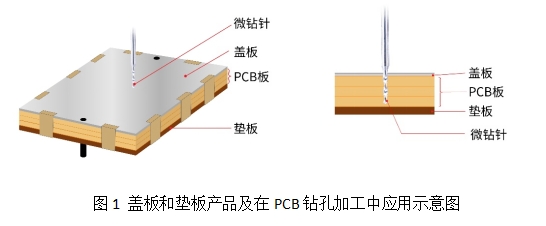
During PCB drilling, entry and backup sheets are functional foils laminated onto the top and bottom surfaces of the pre-laminated PCB workpiece to optimize physical, thermal and mechanical conditions at drill entry and exit points.
Entry sheet: The sheet material placed on the top surface of the workpiece that first makes contact with the drill bit upon penetration.
Backup sheet: The backing material positioned underneath the workpiece, directly contacting the drilling machine worktable at drill exit.
2.2 Core Requirements and Primary Functions
2.2.1 Core Specifications for Entry & Backup Sheets
① Moderate elasticity to absorb impact as the drill engages, stabilizing drill alignment and guaranteeing hole positional accuracy;
② Controlled surface hardness to suppress top-surface burr formation without excessive abrasion of drill bits;
③ Low-resin formulation minimizing resin smear generation during drilling;
④ High thermal conductivity to rapidly dissipate drilling heat and lower drill bit operating temperature;
⑤ Balanced hardness facilitating efficient evacuation of drilling debris.
2.2.2 Primary Functions of Entry Sheets
Positioned on the workpiece top layer, entry sheets are the first medium encountered by the drill bit:
① Positioning: Dampens drill vibration upon initial penetration to reduce deviation, wobble and slippage;
② Surface protection: Prevents pressure foot abrasion of PCB copper traces and pads;
③ Burr suppression: Minimizes entry-edge burrs and lifted copper foil;
④ Thermal management: Conducts drilling heat away to reduce bit wear;
⑤ Self-cleaning: Assists chip removal and clears resin debris from drill flutes.
2.2.3 Primary Functions of Backup Sheets
Placed beneath the drilled substrate at the drill’s penetration endpoint, backup sheets protect drill bits and machine tables. The drill rotates and slides against the backup sheet at high velocity; suitably calibrated hardness, composition and structure avoid extreme thermal buildup and extend drill service life. Key functions:
① Edge burr suppression: Tight contact eliminates exit-side copper burrs;
② Drill and worktable protection for full through-hole drilling;
③ Thermal regulation: Combined thermal conduction and lubrication reduce bit abrasion, improve hole wall quality and minimize drill breakage risk;
④ Auxiliary cleaning: Uniform drilling chips assist with lubrication and smear removal from drill surfaces;
⑤ Stabilized guidance: Restricts lateral drill drift and reinforces positioning accuracy to improve hole precision.
2.3 Main Classification of Entry and Backup Sheets
2.3.1 Entry Sheet Categories
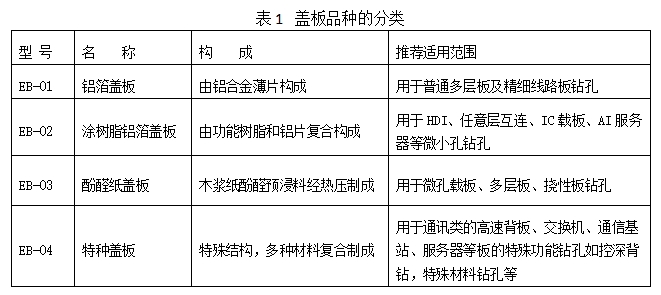
PCB drilling entry sheets are divided into four major groups based on material and construction: aluminum entry sheets, resin-coated aluminum sheets (also known as laminated lubricated aluminum foils), phenolic paper entry sheets (cold-strike sheets), and specialty entry sheets (e.g., depth-controlled back-drilling sheets, composite aluminum foils). For AI server and HPC cluster hardware, combinations of resin-coated aluminum foils and dedicated back-drill entry sheets have become a standard process solution for high-layer-count, high-density back-drilled structures.
2.3.2 Backup Sheet Categories
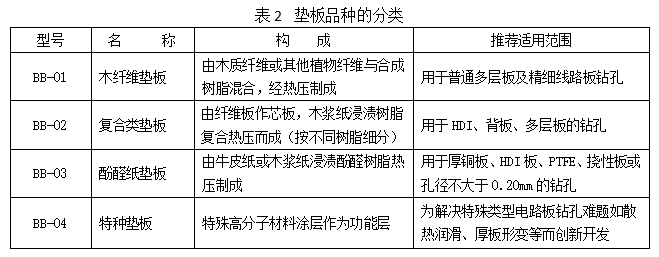
PCB drilling backup sheets fall into four main classifications: wood fiber backup sheets, composite backup sheets (melamine, UV-cured variants differentiated by resin formulation), phenolic paper backup sheets, and specialty backup sheets (high thermal dissipation grades, temporary debonding materials for burr elimination).
Within advanced PCB manufacturing, entry and backup sheets are no longer viewed as low-cost disposable consumables. They stand alongside drill bits, equipment and process parameters as core production inputs. Scientific material selection, precise process matching and optimized system solutions have become vital competitive advantages for leading advanced PCB manufacturers.
III. Market Demand Analysis for Drilling Entry & Backup Sheets
3.1 Overall Market Scale and Structural Trends
Driven by steady expansion of the global PCB industry and rising demand for advanced drilling technologies, entry and backup sheets have developed into a specialized functional materials market exceeding RMB 10 billion in scale. Based on market reports from Prismark, WECC (World Electronic Circuits Council) and CPCA:
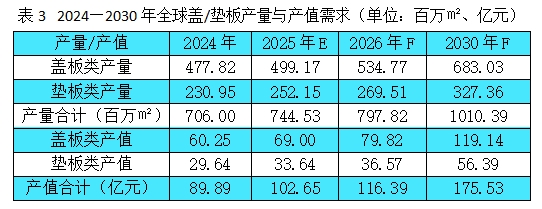
Global PCB output reached approximately 486 million square meters in 2025, alongside 745 million square meters of entry and backup sheet consumption. Demand is projected to exceed 700 million square meters of PCBs by 2030, driving entry/backup sheet demand up to 1.01 billion square meters. Market revenue totaled RMB 102.65 billion in 2025 and is forecast to reach RMB 175.53 billion by 2030.
Historical data and industry forecasts show the entry/backup sheet market cycles in parallel with the broader PCB sector. The market bottomed out in 2018–2019 and returned to stable growth from late 2019. After 2021, the PCB industry rebounded strongly supported by new electronic product development. The 2024 AI server market boom triggered explosive demand for premium, innovative entry and backup sheets for ultra-high-layer high-precision PCBs. Asia remains the global hub for PCB production and associated specialty materials. It is estimated that Mainland China accounted for RMB 59.46 billion of regional entry/backup sheet demand in 2025, projected to rise to RMB 104.34 billion by 2030.
3.2 Entry Sheet Market Scale & Product Mix
Global consumption of PCB drilling entry sheets reached 499.17 million square meters in 2025: aluminum sheets at 295.95 million sq.m (RMB 36.99 billion), resin-coated laminated aluminum sheets at 136.82 million sq.m (RMB 21.21 billion), and phenolic paper sheets at 55.29 million sq.m (RMB 6.91 billion). Demand for entry sheets will expand to 683.03 million square meters by 2030. Global market revenue for entry sheets will grow from RMB 69.00 billion (2025) to RMB 79.82 billion (2026), targeting RMB 119.4 billion by 2030 with a CAGR of 11.47%.
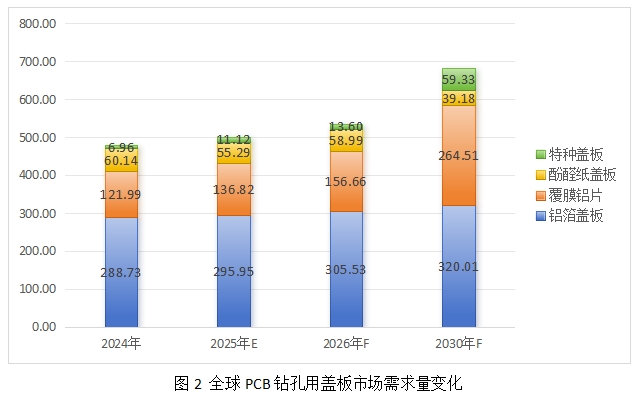
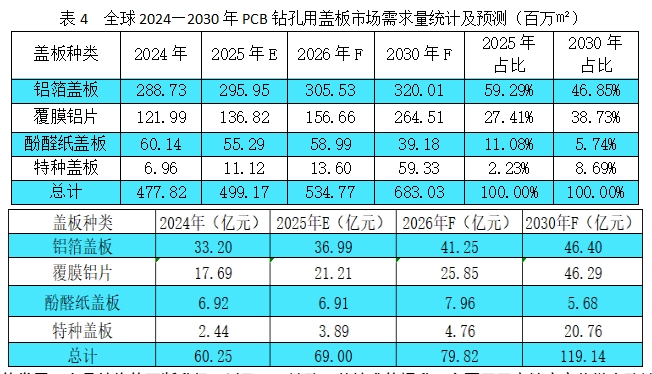
Ongoing advances in PCB design and drilling processes have steadily lifted adoption of laminated lubricated aluminum foils suited for high-precision microvia drilling, premium hole wall quality, flexible-rigid boards and multi-layer flex circuits. Laminated aluminum foils captured 27.41% of global entry sheet consumption in 2025; the proportion is expected to rise to 38.73% by 2030. Supported by low-loss high-speed signal requirements for AI servers and communication backplanes, specialty entry sheets dedicated to precision depth-controlled back drilling will also grow rapidly, lifting their market share from 2.23% to 8.69%.
3.3 Backup Sheet Market Scale & Product Mix
Global demand for PCB drilling backup sheets reached 252.15 million square meters in 2025, valued at RMB 33.64 billion. Breakdown: wood fiber backup sheets at 155.66 million sq.m (RMB 14.79 billion), composite backup sheets at 71.32 million sq.m (RMB 9.63 billion), phenolic paper backup sheets at 20.95 million sq.m (RMB 7.96 billion). Production and market value will rise to 269.51 million sq.m and RMB 36.57 billion in 2026, and reach 327.36 million sq.m with revenue of RMB 56.39 billion by 2030.
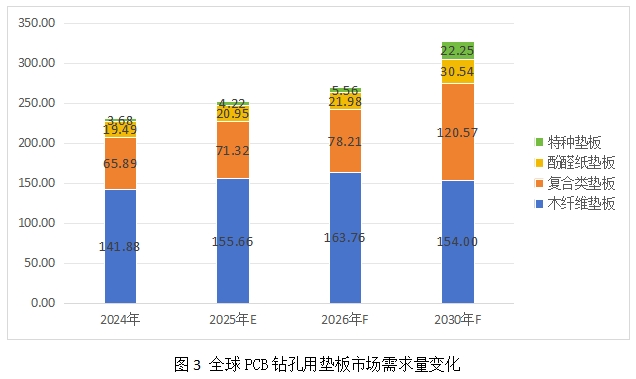
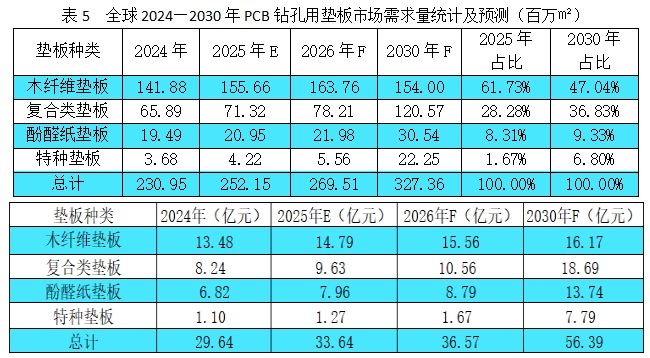
Wood fiber backup sheets remain the highest-volume grade for general mid/low-tier PCB drilling. As manufacturing technology advances and complex microvia structures proliferate, demand for composite and phenolic paper backup sheets for high-layer automotive PCBs, HDI and IC substrates will rise substantially. In addition, high thermal dissipation lubricated backup sheets for high-frequency high-speed circuit boards and temporary debonding anti-burr materials are gaining broad traction as demand for advanced PCBs continues to expand.
3.4 Mainland China Entry & Backup Sheet Market Landscape
Mainland China represents the world’s largest regional consumer of entry and backup sheets. Analysis of Prismark and CPCA industry data shows that China consumed 479 million square meters of entry/backup sheets in 2025, representing 63.78% of global demand. Within this volume, entry sheet demand stood at 309 million sq.m (RMB 39.24 billion), while backup sheet consumption reached 170 million sq.m (RMB 20.22 billion). Demand will increase to 719 million square meters with market value of RMB 104.34 billion by 2030. Approximately 12%–15% of domestically manufactured entry/backup sheets are exported, primarily to South Korea, Japan, European nations (Germany, France, Austria) and the United States.
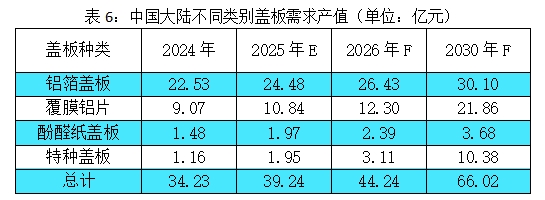
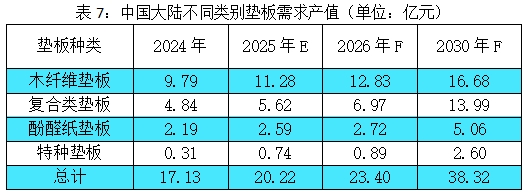
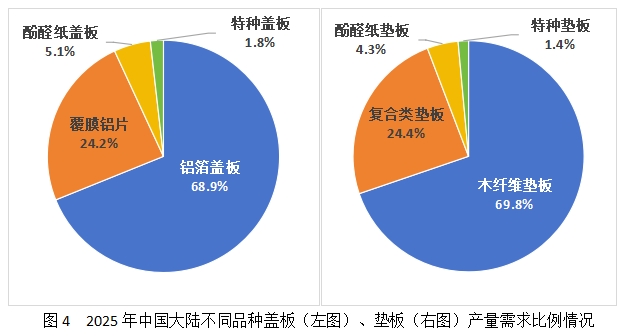
As of 2025, ordinary plain aluminum sheets dominate domestic entry sheet consumption, accounting for roughly 68.9% of usage area. Driven by fine-line high-speed PCB requirements, laminated lubricated aluminum foil entry sheets are expanding rapidly from 24.2% penetration (2025) to an estimated 33.7% by 2030; specialty entry sheets for advanced back-drilling in AI servers will reach 6.64%. Wood fiber backup sheets represent the largest domestic backup sheet category at 69.8% of total volume. Composite backup sheets deliver favorable cost-performance and are steadily penetrating mid-to-high-end PCB drilling processes, projected to grow from 24.4% (2025) to 33.2% by 2030. Specialty backup sheets for AI servers, high-speed communications and PTFE substrates will capture 3.2% market share.
IV. Competitive Landscape of the Entry & Backup Sheet Industry
Despite global macroeconomic volatility and cyclical pressures across electronics sectors, the PCB industry exhibits relatively stable overall demand. PCBs act as the fundamental interconnect platform for all electronic components. Propelled by rapid growth in AI computing infrastructure, hardware specifications and yield requirements for PCBs have become far more rigorous. Drilling constitutes a critical manufacturing stage. Amid the AI-driven shift toward ultra-precise, high-value PCBs, tighter controls are required to suppress drill deviation, bit wear, surface burrs and residual copper. Constrained high-end PCB production capacity further raises requirements for drilling throughput and efficiency, expanding the strategic importance of entry and backup sheet functional materials. Market demand demonstrates strong resilience, with muted cyclical volatility and sustained industry growth.
Numerous companies operate within this sector, yet professional, large-scale manufacturers remain limited, and most producers maintain modest output scales. Amid increasingly strict demands for precision, integration and reliability, market consolidation is accelerating, creating a winner-takes-most dynamic. Enterprises with independent R&D and mass-production capacity stand to capture significant growth opportunities.
Major domestic Chinese manufacturers include Liuxin Industrial, Guangdong Zhongchen, Kunshan Youwen, Shenzhen Wanghong, Shuyou Technology, plus smaller players such as Yiyang Jindong and Zhuhai Guansi. Taiwanese suppliers include Juhsi Enterprise, Hsintai Industrial and Ho Cheng Corporation. International suppliers feature LCOA (USA), three major Japanese manufacturers: Risho Kogyo, Mitsubishi Gas Chemical and Nihon Decoluxe, alongside India’s Golden Laminate and South Korean suppliers Sang-A and Ryuyuan.
Shenzhen Liuxin Industrial Co., Ltd.
Founded in 2003, Liuxin Industrial is one of China’s earliest large-scale specialists in PCB drilling consumables. It operates independent R&D and production bases in Shenzhen, Yantai, Zhuzhou and Kunshan. The firm runs the Guangdong Engineering Technology Research Center for PCB Drilling Entry & Backup Sheets and has led formulation of two national electronics industry standards, three CPCA association standards and one military specification. Leveraging proprietary platforms for chemical synthesis and polymer modification, its premium product portfolio (laminated aluminum foils, depth-controlled back-drill entry sheets, lubricated backup sheets and temporary debonding anti-burr materials) holds substantial domestic and global market share. The company posted operating revenue of RMB 11.44 billion in 2025 and ranks as the domestic sector leader.
Laminating Company of America (LCOA)
Established in 1970 and headquartered in Illinois, USA, LCOA manufactures laminated materials serving construction, signage and graphic applications. It pioneered commercial PCB drilling functional materials and retains a strong footprint within the North American market.
Risho Kogyo Co., Ltd. (Japan)
Founded in 1921, Risho Kogyo manufactures electrical insulation base materials, engineering plastics and epoxy electrical components. Fiberglass composite laminates and phenolic resin boards form key business divisions. Boasting long-established technical heritage, the company holds a strong competitive position in Japan’s domestic market.
Juhsi Enterprise Co., Ltd. (8074.TW)
A Taiwanese publicly traded firm founded February 1, 1996, Juhsi Enterprise produces phenolic paper laminates, epoxy fiberglass laminates and PCB process auxiliary materials. It operates production hubs in Tainan (Taiwan) and Kunshan (Mainland China). Its 2025 operating revenue reached NTD 1.339 billion (approximately RMB 303 million).
Guangdong Zhongchen Industrial Group Co., Ltd.
Registered in Huangpu Economic Development Zone, Guangzhou, Zhongchen Group focuses on PCB/FPC electronic materials including aluminum sheets, coated aluminum foils, backup sheets, kraft paper, chemical supplies, electromagnetic shielding films, conductive adhesives, protective films and abrasive brush rollers. The firm maintains a stable share of the domestic entry/backup sheet market.
V. Opportunities and Challenges for PCB Drilling Materials in the AI & HPC Era
5.1 Market Expansion: Rising Volume and Average Selling Prices
Large-scale deployment of AI computing clusters, 5G-Advanced/6G, HPC and autonomous driving systems is driving comprehensive transformation across the PCB supply chain spanning substrates, stack-up architectures and process capabilities. PCB manufacturers continuously upgrade drilling technology: adopting high-speed CNC drilling machines compatible with M9 advanced substrates, retrofitting legacy equipment, refining drilling parameters and imposing stricter standards for drill bits and entry/backup sheets, unlocking massive growth potential for supporting materials.
Traditional PCB drilling for mid-tier multi-layer boards (4–12 layers) achieves full penetration in single drill passes with low aspect ratios. Ultra-high-layer boards (18–78 layers) support aspect ratios ranging from 10:1 to 30:1. To avoid bit breakage and hole offset, segmented drilling is mandatory, splitting single through-hole penetration into 3–5+ discrete drilling operations. Advanced depth-controlled back drilling requires an additional 4–6 drilling cycles. This directly multiplies consumption of entry and backup sheets. Furthermore, M9 quartz fabric substrates used in high-end PCBs exhibit higher Mohs hardness than standard fiberglass, increasing cutting resistance, requiring more frequent drill bit replacement and tighter hole wall quality control, raising consumable turnover rates. Each ultra-high-layer board carries 20%–30% more vias than conventional boards; multiplied by multi-pass drilling sequences, total drilling operations grow exponentially. Entry sheets are fully disposable while backup sheets have limited reuse cycles. Combined with higher scrap rates driven by rigid substrate hardness, overall consumption can reach 4–6 times that of conventional PCBs. Upgrading toward advanced PCBs drives robust demand growth for drilling consumables, delivering both volume expansion and price appreciation:
Higher PCB machining precision: Driven by high-density AI hardware requirements, drill hole diameters shrink from the typical 0.3–0.4 mm down to 0.1 mm and below. AI servers demand low signal loss, accelerating adoption of low Dk/Df substrates containing harder inorganic fillers. Conventional entry/backup sheets suffer hole deviation and burr defects at ultra-small hole sizes, undermining production yield. Improved flatness, lubrication and thermal absorption performance of advanced entry/backup sheets address heat buildup and drill breakage.
Stricter packaging PCB requirements for large GPU chips: Traditional entry/backup sheets demonstrate inadequate conformability for large-format packaging substrates, causing downstream quality defects resolved via reformulated, innovative material grades.
Expanding share of thick-copper multi-layer PCBs: Thick copper structures impose tighter positional tolerance requirements for entry/backup sheets, alongside intensified challenges from drilling debris and thermal accumulation, demanding enhanced cooling and chip evacuation functionality.
Wider adoption of special processes including back drilling: Back drilling demands machining accuracy of ±25 μm, amplifying the importance of entry/backup sheets for drill positioning stability.
Growing emphasis on sustainability: Environmentally friendly, recyclable and reusable entry/backup sheets gain greater strategic priority.
5.2 Market Segmentation: Shift from General-purpose to Application-specific Materials
PCB product portfolios are undergoing fundamental restructuring. High-value boards including AI server motherboards, 800G/1.6T switch backplanes, millimeter-wave radar substrates, FC-BGA substrates and advanced any-layer HDI boards account for an increasing share of production. These categories differ significantly in via density, hole size distribution, aspect ratios and substrate technology (low Dk/Df high-frequency dielectrics, PTFE, BT resin for packaging substrates). This drives deeper segmentation and customized development for entry and backup sheets.
Entry sheet segmentation trends: Plain aluminum foils suit standard multi-layer through-hole drilling. Resin-coated laminated aluminum variants branch into high-positional-accuracy grades for substrates, high thermal-dissipation grades for high-aspect-ratio thick-copper and power boards, and balanced all-round grades for AI servers and switches. Phenolic paper sheets remain deployed for flexible circuits and thin high-frequency boards. Specialty back-drill entry sheets expand rapidly alongside ultra-high-layer backplane production.
Backup sheet segmentation trends: Wood fiber grades split into medium-density economy variants and high-density general-purpose variants. Composite backup sheets evolve into adhesive-bonded laminates, fast-cure thermoset melamine boards and eco-friendly high-performance grades. Phenolic paper sheets differentiate between standard formulations and premium microvia-specific grades for holes ≤0.15 mm. Functional specialty backup sheets (thermal dissipation, lubrication, burr suppression) are continuously validated by advanced production lines.
Segmentation fundamentally represents a shift from universal one-size-fits-all consumables toward precise matching of material parameters, drilling conditions and production targets, raising expectations for suppliers’ technical expertise and rapid customization capabilities.
5.3 Functional Evolution: From Passive Protection to Active Performance Enablement
Priority functional requirements differ dramatically across product categories for advanced drilling workflows:
High-aspect-ratio thick-copper / high-frequency boards prioritize thermal dissipation;
Ultra-fine pitch BGA and substrate manufacturing prioritizes entry-side drill offset control (≤±2 mil);
Large-format communication backplanes demand robust warp compensation.
A representative case includes thermally integrated high-performance lubricated backup sheets and DB-series temporary debonding anti-burr materials developed by Shenzhen Liuxin Industrial. Formulated for extreme drilling scenarios featuring ultra-thick boards, surface height variation and uneven flatness, these materials have secured positive validation from leading PCB manufacturers.
5.4 Integrated Drilling System Solutions: From Materials to System-level Packages
As drilling accuracy tightens to micron-scale tolerances, material optimization alone can no longer deliver targeted yield outcomes. Process competitiveness increasingly hinges on multi-variable system optimization coordinating drill bits, entry/backup sheets, drilling recipes and equipment health. For instance, stacking additional PCB panels to boost throughput requires pairing laminated aluminum entry sheets with premium composite backup sheets. Microvia drilling for substrates and flex circuits demands laminated aluminum foils matched with phenolic paper backup sheets. High-frequency high-layer PCBs combine thermal-dissipation laminated foils with specialty high-cooling backup sheets. Deformable, uneven multi-layer and rigid-flex assemblies rely on innovative temporary debonding materials and coordinated equipment solutions. Optimized matching of entry and backup sheets resolves drilling defects, enhances hole quality, advances industry technology, raises throughput and lowers total manufacturing cost, substantially improving cost-performance for PCB drilling. The core advantage of integrated solutions extends beyond material combinations: closed-loop pre-development, joint testing and parameter iteration enables customers to lift yields while cutting overall drilling expenditure.
5.5 Mounting Cost Pressures: Dual Headwinds of Low-end Commoditization and High-end R&D Investment
Intense competition across PCB manufacturing, rising raw material costs, tightening environmental regulations and growing labor expenses squeeze manufacturing profit margins. Many mid/low-volume PCB fabricators enforce stringent cost controls and push for cheaper drilling consumables. Low-end plain entry/backup sheets (standard aluminum, wood fiber) carry razor-thin profit margins, occasionally near break-even. Mid-to-high-end grades (cold-strike sheets, melamine boards, phenolic laminates) also face sustained pricing pressure. Diverging application requirements further complicate technical iteration. In tandem with smart factory rollout and ESG environmental mandates, conventional PCB drilling materials must transition toward advanced processing grades and recyclable, circular product platforms.
VI. Outlook: Structural Market Opportunities During the AI Transformation
The entry and backup sheet industry remains relatively fragmented today, with wide disparities in technical maturity and product consistency among participants. As advanced PCB specifications tighten requirements for hole position tolerance (±25 μm), smear/crack-free hole walls and extended drill bit service life, market consolidation will accelerate. Manufacturers capable of independent resin formulation R&D, stable large-volume delivery and turnkey system solutions stand poised to capture advanced-market share. Vendors reliant on undifferentiated low-margin commodity products will face persistent profit compression. From the demand side, AI compute boards consume 4–6 times more laminated aluminum and specialty entry/backup sheets compared with conventional multi-layer PCBs. This structural shift creates a clear upgrade runway for domestic specialty material enterprises. The next phase of competitive advantage will pivot away from pure cost leadership toward proprietary technical differentiation and material innovation.