189-2464-6170
 szjhpcb@VIP.126.com



How to Calculate Manufacturing Costs and Generate Quotations for Printed Circuit Boards
Full Breakdown of Procurement Inquiries, Cost Accounting & Price Discrepancies
Many PCB procurement specialists and hardware engineers often wonder: for circuit boards with identical dimensions and layer counts, quotation prices from different manufacturers vary drastically. PCBs are highly customized products; raw materials, manufacturing processes, production complexity, quality acceptance standards, and commercial terms all exert major impacts on the final pricing. Below, Juehui Weiye Circuit fully breaks down PCB pricing logic, cost composition, and key points for inquiry submission.
I. Seven Core Factors Affecting PCB Quotation
1. Differences in Base Laminate Raw Materials
Taking double-sided boards as an example, mainstream substrates include FR-4 and CEM-3. Available board thickness ranges from 0.6 mm to 3.0 mm, while copper foil thickness covers 0.5 oz to 3 oz. Different substrate materials and copper foil thickness create obvious cost gaps.
Solder mask inks are classified into conventional thermosetting ink and photosensitive green ink with separate pricing tiers. In addition, laminate brands (Grade A substrates from Shengyi, Kingboard and equivalent economical stock laminates) also influence quoted prices.
2. Variations in Manufacturing Workflows
Different processes lead to divergent production costs: ENIG boards versus HASL boards, routing & profiling versus punch forming, dry-film circuit processes versus screen-printed circuit processes. Each process carries distinct cost levels, directly resulting in quotation discrepancies.
3. PCB Design & Fabrication Difficulty
With consistent material and layer counts, higher design complexity lowers production yield and raises costs.
Example: Two boards of equal size. One features holes all larger than 0.6 mm, while the other contains numerous microvias below 0.6 mm; drilling costs differ significantly.
Likewise, comparing designs with all trace width & spacing greater than 0.2 mm against designs with abundant fine traces below 0.2 mm, fine-line boards suffer higher scrap rates and incur cost premiums.
4. Customer Quality Acceptance Standards
Acceptance specifications directly determine factory control thresholds and finished product yield.
For the same PCB design, production yield can reach 98% under IPC-A-600E Class 1 standards; when upgraded to strict Class 3 requirements, yield may drop to 90%. Cost losses caused by reduced yields are ultimately reflected in the quotation.
5. Equipment & Process Capabilities of Different PCB Manufacturers
Even for identical orders, manufacturers adopt different equipment and technical routes, leading to varied cost structures.
Some factories achieve stable yields for ENIG products, while others face high scrap rates with ENIG and prioritize HASL boards, occasionally offering lower HASL quotations compared to ENIG.
6. Payment & Settlement Terms
Nearly all circuit board manufacturers adjust quotations according to payment credit terms, with typical price differentials ranging from 5% to 10%. Unit prices differ substantially for prepayment orders, monthly billing accounts, and extended credit-term orders.
7. Regional Supply Chain Disparities
China’s PCB industry is widely distributed, with overall prices generally rising gradually from southern to northern regions. Industrial clusters have differing labor, plant rental and supporting supply chain expenses, creating regional quotation gaps.
II. Four Fundamental PCB Cost Components
Laminate Expense: Substrates, copper foil and auxiliary materials, affected by laminate grade, thickness, copper weight, brand, and panel utilization rate;
Drilling Expense: Hole quantity, hole diameter, and proportion of microvias determine drilling working hours and drill bit wear loss;
Process Processing Expense: Costs for circuit patterning, surface finish, special processes, electrical testing, profiling and other procedures;
Labor, Utilities, Equipment Depreciation & Administrative Overheads: Determined by factory management efficiency and automation level.
III. Key Cost Drivers for Laminate Selection
Substrate Material
FR-4 is widely used for double-sided and multi-layer boards. FR-1 and CEM-1 are common for single-sided boards, with considerable price gaps between material grades.
Board Thickness Specifications
Standard thickness options: 0.4 mm, 0.6 mm, 0.8 mm, 1.0 mm, 1.2 mm, 1.5 mm, 1.6 mm, 2.0 mm. Price differences remain modest within the standard thickness range; extra surcharges apply for ultra-thin and extra-thick non-standard boards.
Copper Foil Thickness
Common grades: 18 μm (0.5 oz), 35 μm (1 oz), 55 μm (1.5 oz), 70 μm (2 oz). Higher copper weight increases both raw material and etching costs.
Copper-Clad Laminate Supplier Tier
Grade A branded laminates and economical inventory laminates have different procurement costs — a frequently overlooked hidden factor during price comparison.
IV. Major Surcharge Items for Processing Costs
Fine Line Process: Designs with trace width & spacing ≤ 4 mil / 4 mil are defined as fine-line circuits and subject to separate price uplifts;
BGA Zones: Designs incorporating BGA pads increase process control difficulty. Some manufacturers charge additional fees based on BGA quantities;
Surface Finish Process: Distinct price gaps exist among HASL, OSP, Immersion Tin, Immersion Silver, ENIG and ENEPIG;
Quality Specifications: Default industry benchmark is IPC Class 2. Products for Japanese-funded customers, medical and military applications often require IPC Class 3 plus internal corporate standards; tighter specifications command higher pricing.
V. Critical Industry Characteristics of PCB Quotation
All PCBs are non-standard custom products manufactured per customer specifications. When calculating quotations, manufacturers tally costs for each individual process and set final prices combined with large production panel utilization.
PCB cost accounting represents a highly complex system within manufacturing. From blanking, lamination, drilling, pattern transfer, surface finish, FQC to final packaging and warehousing, consumption of materials, labor and production scrap losses must be accumulated per production work order.
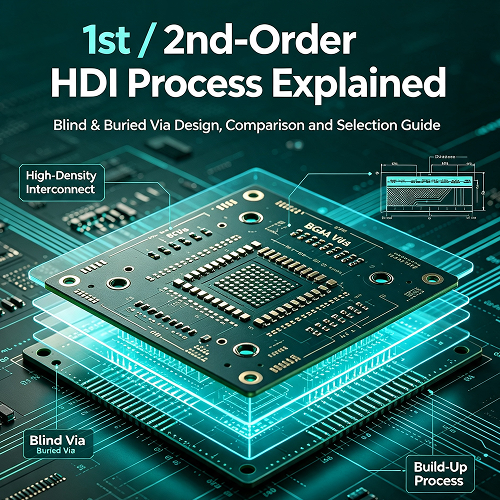
Specialized boards such as blind & buried via boards, heavy copper boards and impedance-controlled boards require dedicated costing frameworks. Factors including drill hole diameter, chemical bath equilibrium and expected scrap loss are all incorporated into cost evaluation.
Important Reminders for Procurement Inquiries
When selecting PCB suppliers, avoid comparing only unit prices. Conduct comprehensive evaluation covering: factory process capability, delivery stability, after-sales support and consistent quality performance.
Low-cost boards manufactured with downgraded substrates may function normally for prototype testing, yet are prone to delamination, warpage and reliability failures during mass long-term operation, resulting in greater hidden economic losses.